
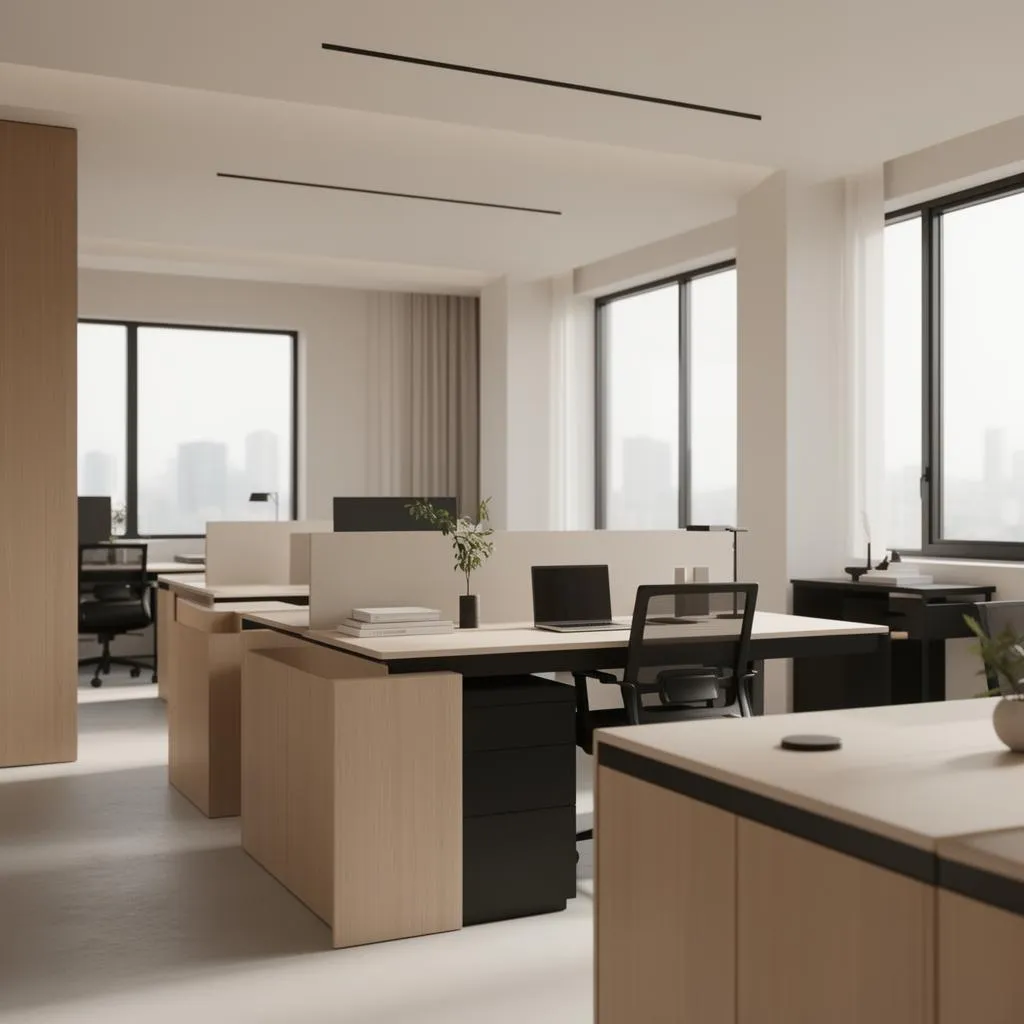
Most offices assume cleaning is enough. In reality, cleaning alone rarely supports a high-functioning workplace — and the leadership teams running professional, legal, finance and tech environments are quietly moving on from it.
The problem isn't cleaning
Across established offices in professional services, legal, finance, tech and high-end retail, the same pattern repeats. Cleaning is being done. Hours are being paid for. And yet the space still doesn't hold.
The most common pain points we hear from operations leads and office managers are familiar ones:
- Inconsistent results from one visit to the next
- Overlooked details in boardrooms, kitchens and bathrooms
- Shared spaces that drift out of standard between visits
- Internal staff quietly tidying after the cleaners have left
- Time lost managing, chasing and re-briefing the provider
The problem isn't effort. It's the lack of structure behind the service. Research from Wageningen University found that perceived cleanliness has a direct, measurable effect on employee productivity — not because cleaning is inherently transformative, but because the absence of a held standard creates friction in the background of every working day.
Where standards break down
Without clear systems behind the service:
- Expectations vary between visits and between team members
- Accountability sits with whoever happens to walk in
- Results depend on personality, not process
- Office managers absorb the gap as unpaid overhead
Studies on office environment and presenteeism published in Building and Environment show that even modest declines in environmental quality measurably reduce perceived work efficiency. Over a year, a workplace running at 90% of its standard is quietly leaving meaningful productive time on the table — and the cost lands on senior staff whose hourly value is highest.
The shift to structured property care
High-performing workplaces are moving away from reactive cleaning. Instead, they implement structured property care — a managed standard rather than a recurring task list:
- Defined standards documented per zone, not per visit
- Repeatable processes that hold across staff turnover
- Consistent execution audited against a written brief
- A single point of responsibility for the condition of the space
The result
When a workplace is properly maintained rather than periodically cleaned:
- Teams stay focused — fewer micro-distractions, fewer side-conversations about the state of the kitchen
- Environments remain functional — meeting rooms, bathrooms and shared zones stay client-ready
- Office managers reclaim the hours previously spent supervising the service
- The workplace presents consistently to clients, candidates and visitors
The space simply works. That is the outcome high-performing offices are buying — not hours, not tasks, not cleaning. A workplace that runs cleanly, consistently, and without friction.
or to discuss your space.